
Everyone keeps blaming interest rates for the housing affordability crisis. Every conversation comes back to the same question: “When will rates come down so housing gets better?”
It’s the wrong question.
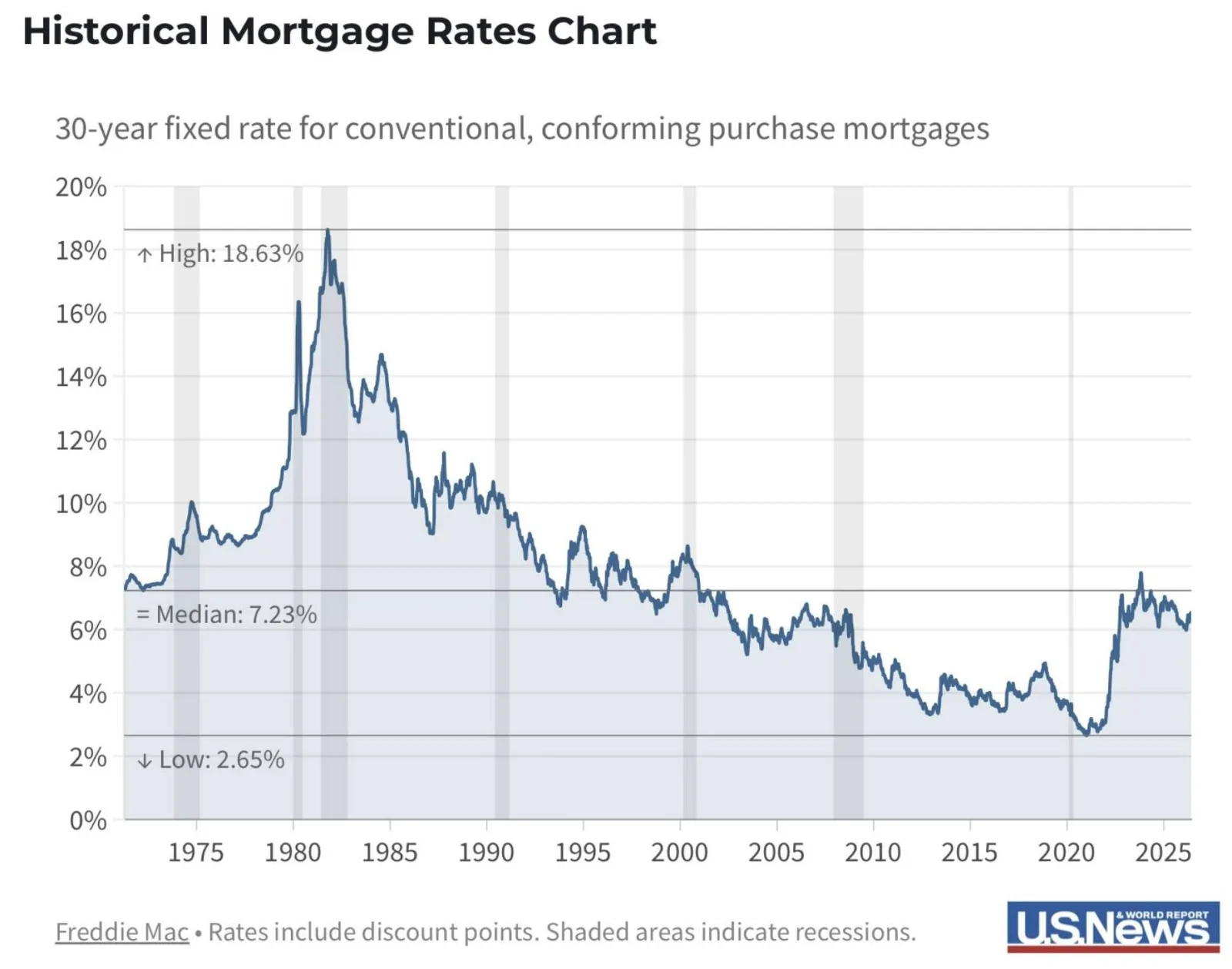
According to Freddie Mac, the 50-year median for a 30-year fixed mortgage is 7.23%. Today we’re around 6.5% — not a historical anomaly, but actually below the long-term average.
If cheap money was the answer, today’s rates would already be fixing the problem.
The real issue is supply, cost, and the difficulty of building homes.
First, the cost to build has permanently moved higher. Since 2020:
- Lumber surged over 300% past $1,600 per thousand board feet before falling back — but it remains roughly 40–55% higher than 2020 levels.
- Structural steel jumped more than 90% in one year and remains 50–65% higher.
- Concrete is the bigger story — it has steadily climbed and is now roughly 45–60% higher than 2020.
Lumber shows prices can fall. Concrete shows some costs reset and stay.
Residential construction inflation normally runs about 4–5% annually. In 2021 and 2022, it hit 14% and 15.8%. It has cooled, but the cost floor already moved higher.
Second, getting projects approved has become incredibly difficult.
Developers are facing longer reviews, more requirements, and delays that add real costs. Every month a project sits waiting adds financing, labor, and carrying costs — and those costs eventually become part of the home price.
Third, the economics push builders toward more expensive homes.
Builders are not making huge profits. Net margins are typically around 6–9%, and many builders lost money last year. Starter homes and higher-end homes share many of the same costs: land, materials, labor, fees, and delays. When the risk is similar, the math often favors the higher-priced product.
That’s why housing prices have separated from incomes.
In the 1990s, the median home cost about 3.2 times the median household income.
Today it’s closer to five times.
In Ephraim, Utah where I've built homes and am building townhomes for sale, average home prices have roughly tripled since 2015 — from about $135,000 to around $405,000 — while incomes have only increased about 55%.
You cannot borrow your way out of an inventory, materials, and approval problem.
Lower rates may help buyers, but they don’t create homes. They increase competition for the homes that already exist.
The solution is structural: build more housing, speed up approvals, encourage more attainable housing, and remove the barriers keeping supply from catching demand.
Housing affordability is not a rate problem. It’s a cost and a supply problem.
